Clarity
Spec tables before adjectives. Engine power in hp/kW, tank capacity in liters, working width in meters.
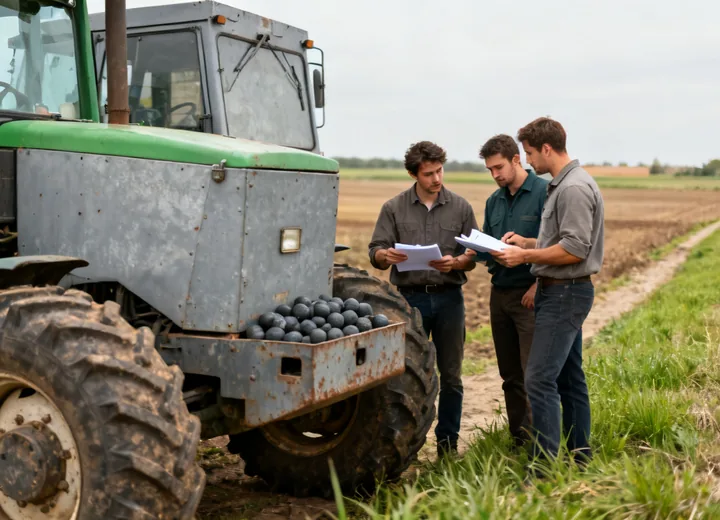
About Fendt
Fendt exists for procurement managers and farm owners who arrive with acreage, utilities and a delivery window already written down. We document tractor classes, PTO maps and dealer routes with the same compactness as the RFQ checklist.
In 2016, regional dealer intake still opened with brochure tours even when growers already knew whether they needed a 180 hp row-crop unit or a 400 hp tillage tractor. By 2019 the documentation desk truncated the intake to six fields: crop, hectares, PTO horsepower, remotes, workshop voltage, and the week the machine must be ready.
In 2022 that habit became the default RFQ packet for export-facing dealer routes. Community dealers still handle local commissioning, but the central question stays the same—does the implement train fit the continuous rating under wet soil, and can parts land before the next spray or harvest gate?
Scope limits stay explicit: Fendt RFQ packs cover tractors and closely attached implements (rotary tiller, planter, boom sprayer, forage train). They do not size Venlo greenhouse glazing, RAS biofilters or IQF freezing lines—those belong on separate vendor sheets.
“If the RFQ already lists grain moisture targets near 14% and hydraulic remotes, skip the slogans and match the tractor continuous PTO rating.”
Field documentation desk, Fendt buyer programs (internal RFQ playbook, 2022 revision)
Spec tables before adjectives. Engine power in hp/kW, tank capacity in liters, working width in meters.
Parts windows and inspection calendars sit next to the quote so downtime is planned, not discovered.
Row-crop, forage and mixed livestock programs get different ballast and remote maps—never one generic pack.
ISO 9001 style process notes and CE-relevant documentation references when export buyers ask.
When a Midwest grain cooperative shortened RFQ intake to six fields, dealer quotes returned with matched PTO ratings and a staged parts kit for the first 400 hours. Operators spent planting week on the seeder, not decoding unmarked remotes.
Similar programs for forage farms pair baler density targets with tractor continuous PTO notes, so wet windows do not force last-minute horsepower upgrades.
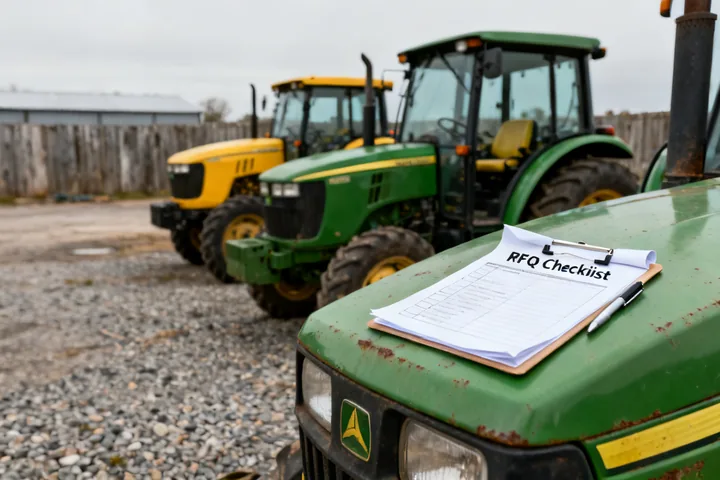
GLOBALG.A.P. oriented farms often request machine hygiene and fuel handling notes alongside horsepower. Fendt keeps those documents short and versioned so agribusiness procurement can file them without rewriting the entire RFQ.
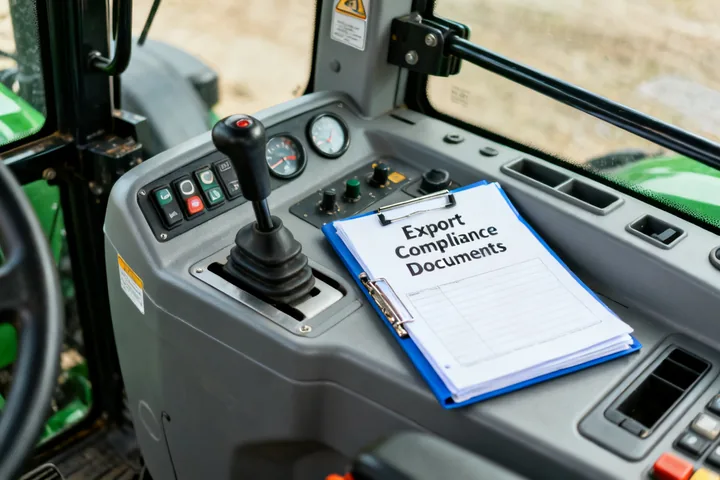
Bring the crop plan and delivery week. We will map the next tractor class and dealer route without a long discovery call.